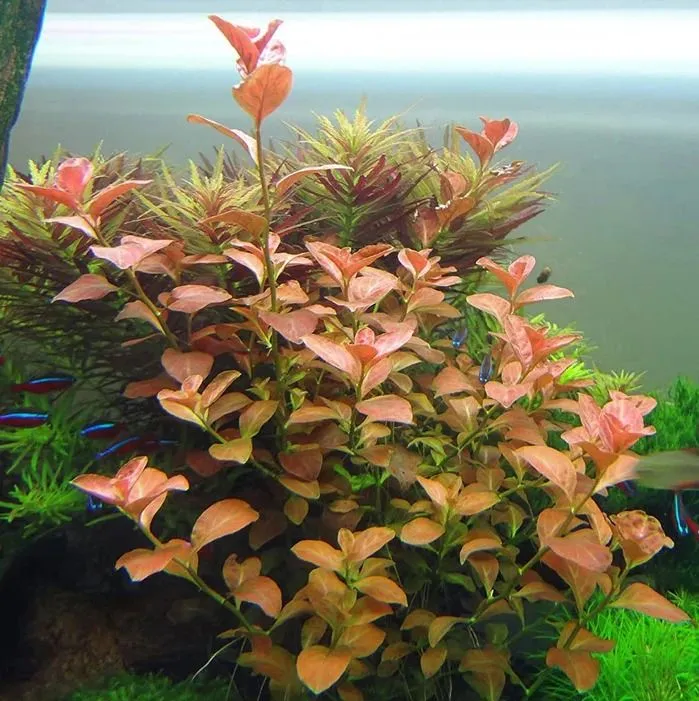
A well-designed planted aquarium rarely looks good because of one spectacular plant. Its appeal usually comes from how different plants work together. Height, colour, leaf shape and spacing create depth, making even a relatively small aquarium appear more natural and visually interesting.
One practical way to plan a planted tank is to divide it into foreground, middle and background zones. This does not mean every aquarium must follow strict aquascaping rules. Instead, these zones provide a simple framework that helps hobbyists decide where different plants may fit before planting begins.
Foreground Plants Keep the View Open
The foreground is the area closest to the front glass. Plants placed here are usually shorter so they do not obstruct the rest of the aquarium.
Some foreground species grow as small individual clusters, while others can gradually spread across the substrate. The best choice depends on how much open space you want to keep and how much trimming you are prepared to do.
It is helpful to research mature height before purchasing. Plants that initially look compact can sometimes grow taller than expected, changing the balance of the entire aquascape.
Midground Plants Connect the Layout
The middle section often has an important design role because it connects low foreground vegetation with taller plants at the back.
Medium-height plants can be positioned beside rocks, around driftwood or between groups of contrasting species. They are useful for hiding abrupt transitions and can give the aquarium a more established appearance.
When planning to buy aquarium plants online, consider creating a list based on these aquarium zones. This makes it easier to avoid accidentally choosing several species that all reach approximately the same height.
A varied selection can provide a clearer sense of depth while still leaving enough swimming room for fish.
Background Plants Add Height and Structure
Tall plants are commonly placed near the back glass or along the corners of the aquarium. Their height can conceal equipment and create a natural-looking backdrop.
Stem plants are frequently used in this area because many can be trimmed and replanted as they grow. Other tall species develop from established root systems and may create dense clusters over time.
Avoid placing every tall plant in a perfectly straight row. Small groups with slightly different heights usually create a softer appearance. It is also wise to leave enough space between young plants because dense planting can become difficult to maintain once everything matures.
Consider Growth Rate Before Creating the Layout
Plant height is only part of the decision. Growth rate can strongly affect how an aquascape changes.
Fast-growing plants may quickly fill empty areas, but they can also require more frequent trimming. Slower-growing varieties often maintain their shape longer, although they may take more time to create a mature appearance.
When comparing aquatic plants online, look at lighting needs, approximate growth pattern and recommended placement rather than choosing solely by colour. Plants that share broadly compatible conditions are easier to maintain within the same aquarium.
This is particularly important for beginners because mixing several highly demanding species into a simple setup can create unnecessary maintenance problems.
Use Colour and Leaf Shape Carefully
Green does not have to mean visually repetitive. Aquarium plants come with narrow leaves, broad leaves, delicate stems, compact growth and many different shades.
Contrast can therefore be created without filling the tank with numerous colours. A fine-leaved plant beside a broad-leaved variety can produce enough variation to make both stand out.
Red or unusually coloured plants can work as focal points, although some species may need particular lighting or nutrient conditions to display their strongest colour. Their requirements should be considered before they become central to the design.
Leave Space for Fish and Future Growth
Plants are only one part of a freshwater aquarium. Fish still need suitable open areas for swimming, feeding and normal behaviour.
An aquascape that looks perfectly full on the first day may become overcrowded once the plants establish themselves. Leaving deliberate gaps between planted areas gives the layout room to develop naturally.
Open spaces can also highlight planted sections rather than making the tank look unfinished. A visible path of substrate, for example, can create depth and lead the eye toward the back of the aquarium.
Make Adjustments Gradually
Aquascaping is rarely finished on the day the plants are added. As the tank develops, some species may grow faster than expected or appear better in another position.
Regular trimming and occasional repositioning are part of maintaining a planted aquarium. Small changes are usually easier than repeatedly redesigning the entire tank.
Photographing the aquarium every few weeks can also help. Changes that are difficult to notice from day to day often become obvious when earlier photos are compared.
Conclusion
Dividing an aquarium into foreground, midground and background areas provides a simple way to create an organised planted layout. It helps hobbyists think about mature plant height, growth rate and the amount of open space the aquarium will eventually need.
The most effective layouts are not necessarily the ones containing the greatest number of species. Careful selection, enough growing room and gradual adjustments can produce a natural aquarium that remains attractive and manageable as it matures.
